
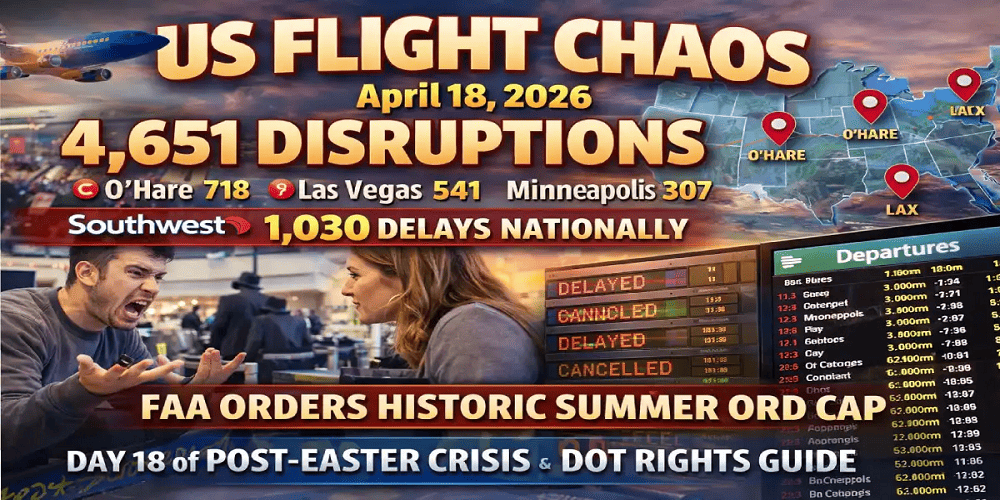
For millions of American travelers, the dream of a seamless journey has increasingly turned into a nightmare of waiting, frustration, and missed connections. The phenomenon of u.s. flight delays and cancellations has become so pervasive that it now shapes not only vacation plans but also business strategies and family reunions. In the first half of this year alone, data from the Bureau of Transportation Statistics revealed that nearly one in five domestic flights either arrived late or never took off at all. This is not just an inconvenience; it is a systemic failure that costs the economy billions annually. Understanding why u.s. flight delays and cancellations happen, how to predict them, and what rights passengers have is essential for anyone who steps into an airport.
The first thing to grasp is the sheer scale of the problem. Between 2021 and 2024, the rate of u.s. flight delays and cancellations has fluctuated wildly, peaking during holiday seasons and summer thunderstorms. Unlike the predictable patterns of the past, current disruptions are often cascading. A single weather event in Chicago can trigger a domino effect that grounds planes in Miami, Los Angeles, and Boston. This interconnectedness means that u.s. flight delays and cancellations are rarely isolated incidents. They are symptoms of an overstretched system operating with razor-thin margins. Airlines, after cutting costs during the pandemic, now struggle with staffing shortages, outdated air traffic control infrastructure, and a surge in post-pandemic demand that no one saw coming with full clarity.
Weather remains the single largest cause of u.s. flight delays and cancellations, but it is not the whole story. Severe thunderstorms, hurricanes, and winter storms account for roughly 70 percent of all delays. However, the Federal Aviation Administration notes that many weather-related cancellations are actually preventable. When an airline knows a storm is approaching, it has choices. It can preemptively cancel flights, reposition aircraft, and notify passengers hours in advance. Too often, airlines gamble on a break in the weather, only to cancel at the last minute. This reactive approach turns a manageable weather event into a chaotic scramble. Passengers left stranded for hours or days are not just angry; they are often left without recourse because the airline classifies the disruption as an “act of God.” This legal loophole is one reason u.s. flight delays and cancellations feel so unfair to the average traveler.
Then there is the human factor. Air traffic controller shortages have reached critical levels. As of early 2025, the FAA is operating with about 1,000 fewer certified controllers than a decade ago. Facilities in New York, Florida, and California are particularly understaffed. When a controller shortage combines with bad weather, the result is ground stops and ground delays that ripple nationwide. These staffing issues directly contribute to u.s. flight delays and cancellations because the system simply cannot handle the volume of planes. Airlines have added more flights than the infrastructure can support. It is a classic case of overcapacity. The skies are crowded, but the people on the ground who organize that traffic are exhausted and overworked.
Mechanical issues also play a role, though a smaller one than most people assume. Only about 8 percent of u.s. flight delays and cancellations stem from maintenance problems. That number, however, has increased recently due to supply chain disruptions. Spare parts for engines, landing gear, and avionics are harder to get. When a plane breaks down, it might stay broken for days instead of hours. Airlines have also retired older aircraft faster than they could order new ones, leaving them with lean fleets. There is no slack in the system. Under normal conditions, an airline might have spare planes on standby. Today, every available jet is in the air. This lack of redundancy means that any single mechanical failure can cause a cascade of u.s. flight delays and cancellations across an entire network.
The financial impact on passengers is staggering. Beyond the obvious cost of missed hotel nights or wasted event tickets, there are hidden expenses. Meals, alternative transportation, extra baggage fees, and last-minute ticket purchases add up. A study from the travel insurance industry estimated that the average affected passenger loses between 300 and 600 dollars per disruption. Multiply that by the millions of travelers who experience u.s. flight delays and cancellations each year, and you get a figure in the billions. Yet, airlines are not required to compensate passengers for delays or cancellations caused by weather or air traffic control. Only cancellations within the airline’s control, such as crew shortages or maintenance, trigger refund obligations. This gap in passenger rights is a source of endless frustration.
What makes u.s. flight delays and cancellations even more maddening is the lack of transparency. Airlines often provide vague reasons for disruptions, using catch-all terms like “operational constraints” or “late arriving aircraft.” Passengers rarely get the full truth. Was the cancellation due to a missing flight attendant? A software glitch? A deliberate schedule reduction to save fuel? Most travelers never find out. This opacity erodes trust. It also makes it difficult to claim compensation when it is legally due. The Department of Transportation has proposed new rules requiring airlines to automatically refund passengers for significant delays, but those rules have been delayed by legal challenges from industry groups. Until they take effect, u.s. flight delays and cancellations will continue to be a gray area where passengers have few clear rights.
On the positive side, some airlines have begun to adapt. Delta Air Lines and United Airlines have invested heavily in predictive analytics. Their software crunches weather data, aircraft locations, crew schedules, and historical performance to forecast u.s. flight delays and cancellations up to 72 hours in advance. This allows them to proactively rebook passengers before they even leave for the airport. Southwest Airlines, after its infamous 2022 holiday meltdown that led to over 16,000 cancellations, completely overhauled its crew scheduling system. The old system used outdated technology that could not handle rerouting staff during storms. The new system is cloud-based and can update in real time. These changes are working. Southwest’s cancellation rate dropped by 40 percent in the following year. The lesson is clear: u.s. flight delays and cancellations are not inevitable. They are the result of choices, investments, and priorities.
For passengers, knowledge is power. The single best way to avoid u.s. flight delays and cancellations is to book the first flight of the day. Early morning flights have the highest on-time performance because the aircraft and crew have been in place overnight. As the day progresses, delays accumulate. A flight at 6 a.m. has an 85 percent chance of departing on time. By 6 p.m., that probability drops below 60 percent. Similarly, nonstop flights are far more reliable than connections. Every layover introduces another point of failure. If you must connect, allow at least two hours between flights. Tight 45-minute connections are a recipe for disaster, especially in hub airports like Atlanta, Denver, or Dallas-Fort Worth, where u.s. flight delays and cancellations are common due to high traffic volume.
Another practical tip is to avoid checking a bag whenever possible. If your flight is canceled and you need to rebook on another airline, having checked luggage becomes a major obstacle. Your bags will be tied to the original airline’s system, making it difficult to switch carriers. Traveling with only a carry-on gives you flexibility. It also allows you to change flights quickly if you see a better option. During large-scale disruptions, airline apps and customer service lines become overwhelmed. The fastest way to rebook is often to go directly to a gate agent at the airport or to use the airline’s social media channels. Many airlines now have dedicated Twitter and Facebook teams that can rebook passengers faster than the phone lines.
Technology can also help. Several third-party apps, such as FlightAware and FlightStats, provide real-time tracking of u.s. flight delays and cancellations. These apps often show information before the airline updates its own system. They can alert you to problems with your aircraft’s incoming flight, giving you a heads-up that a delay is likely. Another tool is the free “same-day standby” feature offered by most major airlines. If you arrive at the airport early and your original flight is delayed, you can often ask to be put on an earlier flight for free. Gate agents have discretion to do this, especially if you are polite and flexible. It is one of the best-kept secrets for beating u.s. flight delays and cancellations without paying extra.
Travel insurance is another layer of protection, but only if you read the fine print. Many credit cards offer trip delay insurance automatically when you book the ticket with that card. This coverage typically kicks in after a delay of six or twelve hours, reimbursing you for meals, hotels, and ground transportation. However, policies vary widely. Some exclude weather-related u.s. flight delays and cancellations, while others cover them fully. The best policies are “cancel for any reason” plans, but they cost significantly more. For most travelers, a basic travel insurance policy that covers delays over six hours is sufficient. Just do not buy it from the airline at checkout. Those policies are overpriced and have poor coverage. Shop independently.
The future of u.s. flight delays and cancellations may finally be improving. The FAA recently secured funding to modernize its air traffic control system, replacing radar-based tracking with satellite-based NextGen technology. This upgrade will allow planes to fly closer together safely, increasing capacity and reducing weather-related delays. New York’s LaGuardia Airport, once notorious for delays, has completely rebuilt its runways and terminals. Early data shows a 30 percent reduction in delays there since 2023. Meanwhile, Congress is considering a bipartisan “Passenger Bill of Rights” that would mandate compensation for any cancellation or delay over three hours, regardless of cause. If passed, this would transform how airlines handle u.s. flight delays and cancellations. They would have a financial incentive to build resilience rather than gamble on perfect conditions.
In the meantime, passengers must advocate for themselves. When a delay or cancellation happens, document everything. Take screenshots of the airline’s app showing the disruption. Keep receipts for meals and hotels. Ask gate agents for written confirmation of the reason for the delay. If the airline claims it was weather, but you suspect crew issues, file a complaint with the Department of Transportation. The DOT maintains a public database of airline performance, and enough complaints can trigger an investigation. Collective action matters. In 2024, a group of passengers stranded by mass u.s. flight delays and cancellations at Newark Airport successfully sued JetBlue for breach of contract, winning 500 dollars each. Small claims court is a realistic option for delays over six hours, especially if the airline refuses to rebook you on a competitor’s flight.
Finally, it is worth remembering that u.s. flight delays and cancellations are not equally distributed. Some airports are consistently worse than others. Newark Liberty, Chicago O’Hare, and Denver International have the highest delay rates among major hubs. In contrast, Salt Lake City, Portland, and San Diego have some of the best on-time records. If you have flexibility in choosing your departure or arrival airport, it pays to avoid the worst offenders. Similarly, certain airlines perform better. Delta and Alaska Airlines consistently rank highest for on-time performance, while Frontier and JetBlue rank lowest. Budget airlines are not always a bargain when you factor in the higher probability of u.s. flight delays and cancellations. Sometimes paying a little more for a legacy carrier is actually cheaper in the long run.
The emotional toll is harder to quantify. Staring at a departure board as flight after flight flips from “On Time” to “Delayed” to “Cancelled” is a uniquely modern form of helplessness. Families miss weddings. Businesspeople lose deals. Seniors get stranded without their medication. These are not abstract statistics. Behind every cancellation are real people with real plans. The system’s failure to handle u.s. flight delays and cancellations gracefully is a policy choice, not a law of nature. Europe, for example, has far stronger passenger protections. Under EU Regulation 261, airlines must pay 250 to 600 euros per passenger for cancellations and long delays, plus provide meals, hotels, and rebooking. The result is that European airlines invest heavily in contingency planning. Their cancellation rates are roughly half those of U.S. carriers. It is possible to do better.
Until U.S. law catches up, the burden falls on travelers. Check your flight status before leaving home. Sign up for free alerts from your airline. Pack a change of clothes and essential medications in your carry-on. Have a backup plan. Know which credit card you used to book the ticket and what protections it offers. And perhaps most importantly, cultivate patience. The gate agent in front of you did not cause the u.s. flight delays and cancellations. They are just as frustrated as you are, and they have far less power to fix the problem. Kindness, surprisingly often, gets you rebooked faster than anger.
In the end, the crisis of u.s. flight delays and cancellations is a mirror reflecting deeper issues in American infrastructure, labor markets, and corporate priorities. The skies are not the limit. They are a bottleneck. But with the right information and a little luck, you can still navigate them successfully. The key is to stop thinking of flying as a utility and start treating it as a fragile system that requires active management. Check the weather along your entire route, not just at your departure airport. Avoid peak travel days like Sundays and the day before Thanksgiving. Fly early. Pack light. Stay informed. And when things go wrong, know your rights. Because in the world of modern air travel, the only thing more certain than u.s. flight delays and cancellations is that they will happen to you eventually. The only question is how prepared you will be.
Frequently Asked Questions
What is the primary cause of u.s. flight delays and cancellations?
Weather is the primary cause, accounting for roughly 70 percent of all disruptions. Thunderstorms, snow, fog, and high winds directly impact takeoff and landing safety. However, secondary factors like air traffic controller shortages and airline crew scheduling problems often turn a minor weather event into a major cascade of delays.
How can I check if my flight is at risk for u.s. flight delays and cancellations?
Use third-party apps like FlightAware or FlightRadar24 to track your aircraft’s incoming flight. If that inbound flight is delayed or canceled, your flight is likely to be affected as well. Also check the FAA’s air traffic control status map for ground stops or delays at your departure and connecting airports.
Do I get a refund if my flight is canceled?
Yes, for cancellations, you are legally entitled to a full refund to your original form of payment, regardless of the reason. This includes non-refundable tickets. For delays, a refund is only required if the delay is “significant” – typically defined as over three hours for domestic flights and six hours for international – but the definition varies by airline contract.
Are u.s. flight delays and cancellations worse at certain times of year?
Absolutely. Summer (June through August) sees the highest number of delays due to afternoon thunderstorms. Winter holidays, especially the week between Christmas and New Year’s, have high cancellation rates due to snow and ice storms. Spring and early fall are generally the most reliable travel periods.
Can I get compensation for meals or hotels during u.s. flight delays and cancellations?
Airlines are not required by law to provide meals or hotels for weather-related delays. However, most major airlines have internal policies offering meal vouchers and hotel accommodations for controllable cancellations (maintenance, crew issues). Always ask a gate agent. If they refuse, your travel credit card’s trip delay insurance may reimburse you.
What is the difference between a delay and a cancellation in terms of passenger rights?
A cancellation triggers an automatic right to a refund or rebooking on the same airline. A delay only triggers that right if it crosses a threshold that the airline considers “significant.” For most U.S. airlines, a delay of less than three hours does not entitle you to any compensation beyond the airline’s voluntary goodwill.
How far in advance do airlines know about u.s. flight delays and cancellations?
Airlines often know about potential weather-related cancellations 12 to 24 hours in advance. However, they frequently wait until the last minute to announce a cancellation, hoping conditions improve. Crew-related cancellations can be announced just an hour before departure. This is why proactive monitoring is essential.
Do smaller airports experience fewer u.s. flight delays and cancellations?
Not necessarily. Small airports with limited airline service can be hit harder because there are fewer alternative flights. If your small airport flight cancels, you might wait days for the next one. Large hub airports have more flights, so rebooking is easier, even if the initial delay rate is higher.
Will buying a first-class ticket protect me from u.s. flight delays and cancellations?
No. First-class passengers face the same delays as economy passengers. The only difference is that first-class passengers may get rebooked faster because airlines prioritize their high-value customers. For true protection, buy a refundable ticket or travel insurance.
Is there any legal action pending to reduce u.s. flight delays and cancellations?
Yes. The Department of Transportation has proposed a rule requiring automatic cash refunds for delays of three hours or more. Separately, a bipartisan bill in Congress, the “Passenger Rights Act,” would mandate compensation of 200 to 500 percent of the ticket price for cancellations within 14 days of departure. Both are currently under review.
Leave A Comment
0 Comment